Scar Treatment in Neenah, WI
Surgical, accidental, or from something you would rather not explain.
Scars from surgery, injury and burns behave differently from acne scars and from each other. Age matters, colour matters, and whether it is raised or sunken changes the answer entirely.
What is actually happening
Every scar has an age, and it changes the answer.
A scar spends its first twelve to eighteen months remodelling. During that period it is still actively changing — usually red, sometimes raised, and far more responsive to treatment than it will ever be again. Early intervention is genuinely more effective than late intervention.
After that it matures. The redness fades, the collagen settles, and what is left is largely permanent unless something forces a remodelling response. That is what every treatment on this page is doing: creating a controlled injury that reopens the rebuilding process.
Raised and sunken scars are opposite problems. A hypertrophic or keloid scar laid down too much collagen; an atrophic scar laid down too little. Treating one as though it were the other makes things worse, and keloid-prone skin needs particular care with any resurfacing.
Colour is separate from texture. A scar can be flat and still obvious because it is red or pale, and that is a vascular or pigment issue treated with laser rather than with needling. Many scars need both, in sequence.
What we can do about it
Three options, and the order depends on the scar.
There is no single scar treatment. What is right for a two-year-old surgical line on a shoulder is wrong for a raised keloid or a pale stretch mark.
- 01SkinPen Microneedling
The general-purpose choice for sunken and surgical scars
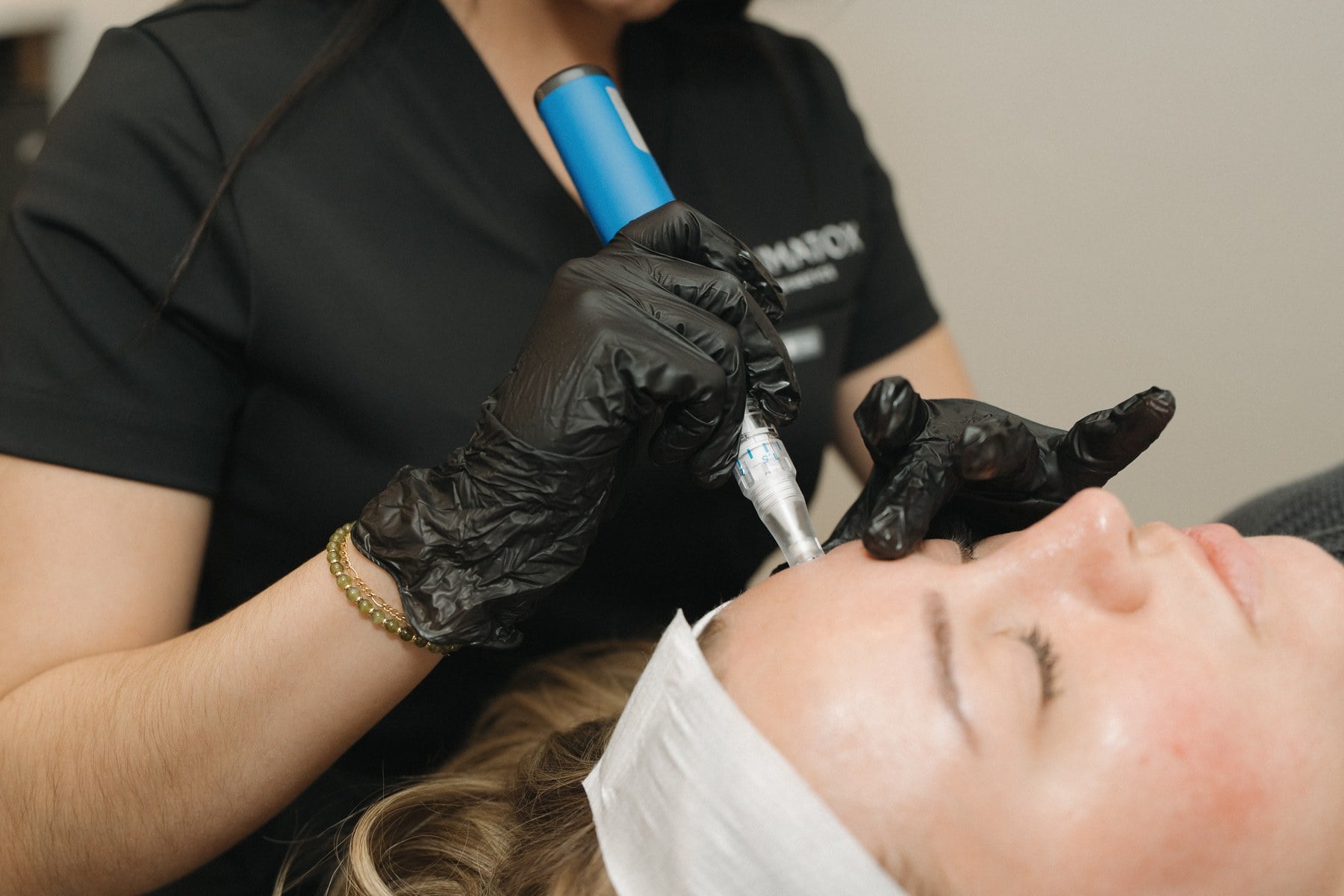
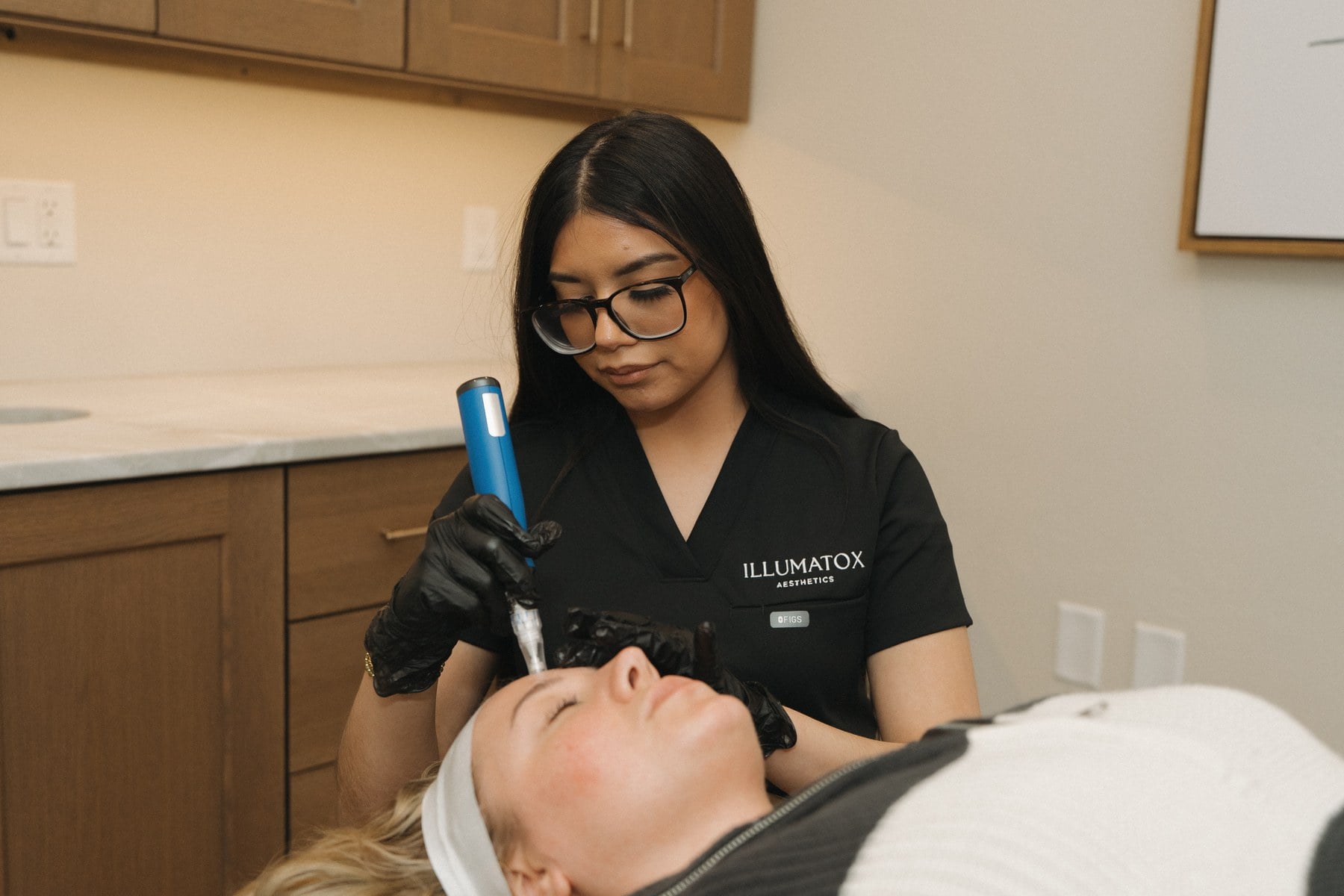
The only microneedling device FDA-cleared for treating neck acne scarring, and it works the same way on surgical and injury scars — controlled remodelling, four to six sessions. It softens and flattens; it does not remove a line.
- 02Vivace RF Microneedling
For thicker, older or tethered scars
Radiofrequency at depth reaches fibrous tissue that surface needling cannot. Better on mature, dense scars. Used cautiously on skin with any keloid history, because aggressive energy can provoke the exact response you are trying to undo.
- 03Aerolase Skin Rejuvenation
For the colour rather than the texture
Targets the dilated vessels that keep a young scar red, and is safe across all skin tones — which matters, because many resurfacing lasers are not. It changes how visible a scar is without changing its shape.
What we would recommend
What we would ask before recommending anything.
How old is it, is it raised or sunken, and what colour is it. Those three answers narrow the options faster than anything else, and they are the reason we will not quote a scar plan over the phone.
For a red, recently healed surgical scar, Aerolase for the colour comes first and needling comes later once the tissue has matured a little. Going straight in with aggressive resurfacing on a scar that is still remodelling can worsen it.
If there is any history of keloid scarring, tell us — including in a family member. It changes what is safe, and in some cases the correct advice is a dermatology or plastics referral rather than any treatment we offer.
What to expect
What a scar course looks like.
- Session count
- Four to six sessions is typical, spaced four to six weeks apart. Older and denser scars need more; scars under a year old often need fewer because the tissue is still willing to remodel.
- How much change
- A realistic outcome is a scar that is flatter, softer and closer to your skin tone. Complete disappearance is not on the table with any non-surgical treatment, and we say so before you commit.
- Body scars
- Scars off the face remodel more slowly — the blood supply is poorer and the skin is thicker. A course on a shoulder or an abdomen takes longer to show change than the same course on a cheek.
- Cost
- Priced per session by treatment area. Scar work on a small area is often less than the published facial price, which we confirm at consultation once the area is measured.
SkinPen Microneedling is $350, or $325 for members at our Neenah studio. It is the treatment most plans for this concern are built around, and every other figure on this page’s options is published too.
Common questions
What people ask about scarring.
Does the age of the scar matter?
Less than people assume. Newer scars, within the first year or so, remodel more readily while the tissue is still active. Older scars still improve, they simply need more sessions to get there. What matters more than age is the type — raised, flat or indented all behave differently, and a keloid needs a different conversation entirely.
How soon after surgery can a scar be treated?
Once the wound is fully closed and your surgeon has cleared it — usually six to eight weeks for laser work on colour, and three months or more before any needling. Treating early, within the first year, produces better results than waiting, but treating too early risks disrupting a healing wound.
Can old scars still be improved?
Yes, though the change is more gradual. A mature scar has settled collagen that will not remodel on its own, so treatment has to force the process — which means more sessions and a longer timeline than the same scar would have needed at six months old. Improvement is still real and worth doing.
Will treatment work on stretch marks?
Partially. Newer stretch marks that are still red or purple respond considerably better than old white ones, because there is still an active vascular and remodelling component. White, mature stretch marks improve in texture with microneedling but rarely change much in colour, and we would rather set that expectation first.
Is scar treatment painful?
Topical numbing is applied for around thirty minutes before microneedling, after which most people describe pressure and vibration rather than pain. Aerolase needs no numbing at all. Afterwards the area feels like mild sunburn for a day, and body areas tend to be more comfortable than the face.
What if I have keloid scars?
Tell us at consultation, including any family history. Keloid-prone skin can respond to aggressive energy treatment by producing more scar tissue, which is the opposite of the goal. In those cases we either treat very conservatively or recommend a dermatology referral for intralesional treatment we do not provide.
Bring the history, not just the scar.
How old it is, how it healed and whether anyone in your family scars badly changes the plan more than what it looks like today.