Sun Damage Treatment in Neenah, WI
Wisconsin summers are short. The skin keeps the receipts anyway.
Four months of genuine intensity on the lake, twenty years of driving with a left arm at the window, and the damage that shows up in your forties was mostly done before you were twenty-five. Most of it is treatable.
What is actually happening
A record of every summer, stored in pigment.
UV exposure prompts pigment cells to produce melanin as a defence. Repeat that over decades and the response becomes uneven and permanent — clusters of overactive cells producing discrete brown patches while the skin around them stays clear. Those are sun spots, and they are cumulative rather than recent.
The same exposure breaks down collagen and elastin in the dermis. This is why sun-damaged skin is not only spotted but also coarser, more lined and less resilient than skin of the same age that was protected.
Distribution tells the story. The left side of the face is usually worse in a country that drives on the right, the chest and shoulders carry decades of summer, and the backs of the hands are almost always further along than the face because nobody protects them.
One more thing worth knowing: anything genuinely changing in size, shape or colour is a dermatology question before it is an aesthetic one, and we will send you rather than treat it.
What we can do about it
Three options, and one of them is not optional.
Sun damage is the concern with the highest ratio of visible improvement to effort. It is also the one that returns fastest if the last item on this list is skipped.
- 01IPL Photofacial
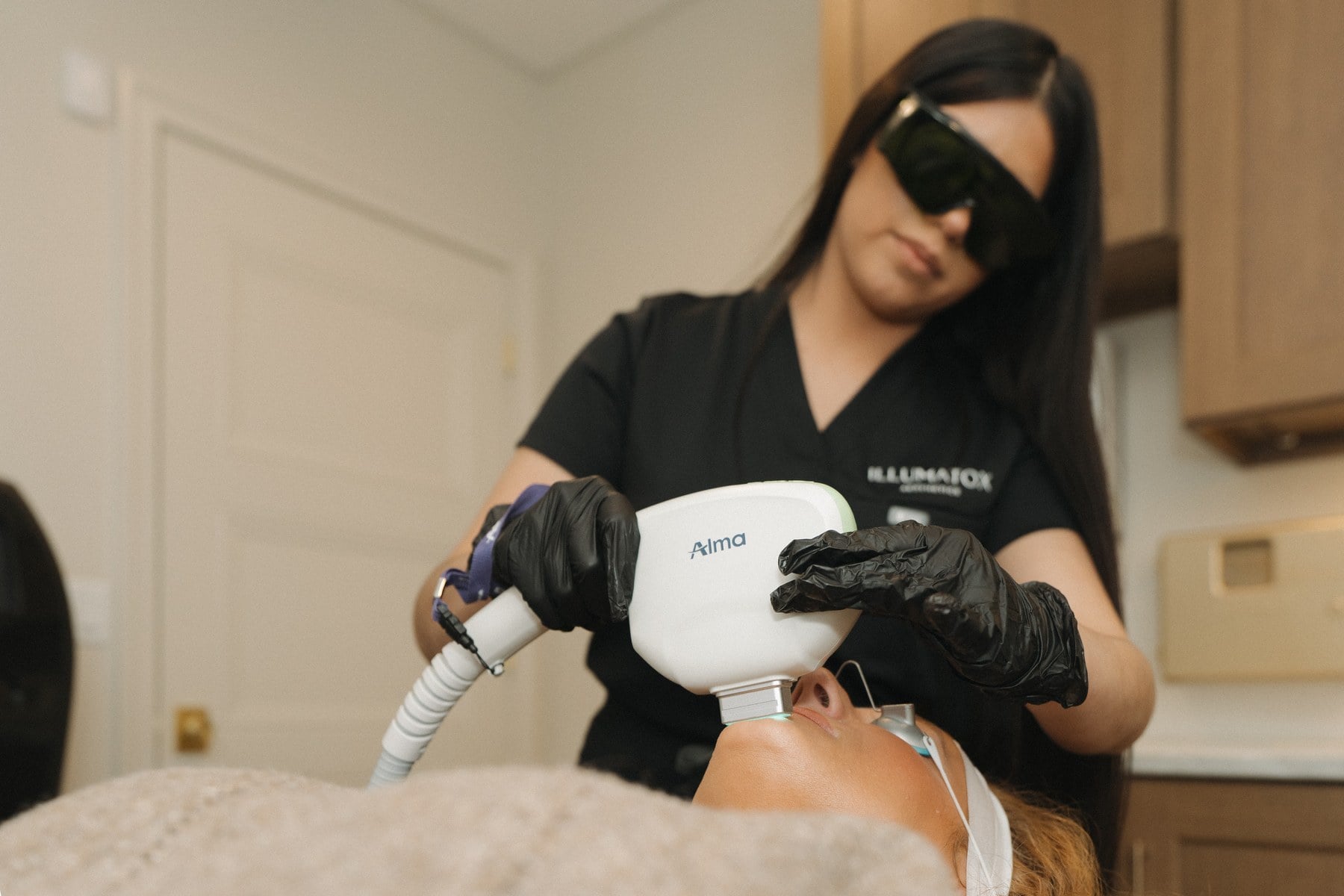
The most effective treatment for sun spots
Light absorbed by the pigment lifts spots to the surface, where they darken over several days and then flake away. Two to three sessions handles most faces. Not appropriate for true melasma, where heat aggravates the pigment.
- 02VI Medium Depth Peel
For tone and texture at the same time
Resurfaces the damaged layer, so it improves the roughness and fine lines alongside the pigment. Around five days of visible peeling, which is why it is a treatment for autumn rather than for June.
- 03Daily sun protection
The one that decides whether any of it lasts
Colorescience mineral SPF, worn on the days you are not thinking about the sun. Every treatment on this page is undone by the next few summers without it, and that is not a sales line — it is the actual mechanism.
What we would recommend
Start in autumn, and do the hands too.
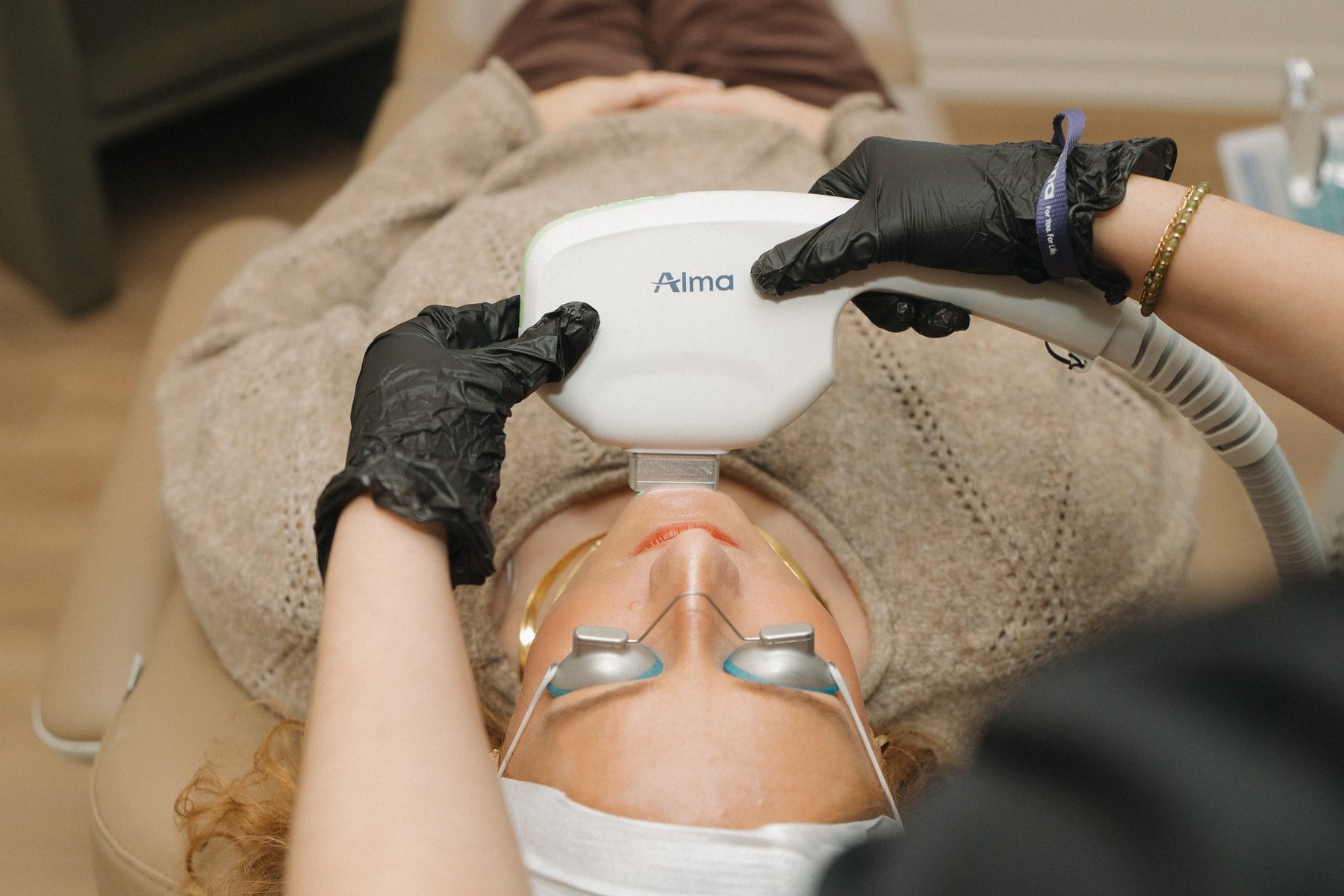
IPL through autumn and winter, when UV is low and the treated skin is not being re-exposed a week later. Two to three sessions four weeks apart clears most facial sun damage, with the spots darkening for about a week before they flake off.
Include the chest and the backs of the hands. People treat the face and then notice the mismatch, and both areas are priced separately for exactly that reason. Hands respond well and are the most commonly skipped area on the list.
If the pigment is patchy and diffuse rather than in discrete spots, we scan before treating. That pattern often means melasma, and IPL on melasma can make it worse rather than better.
What to expect
What treatment looks like, week by week.
- Session count
- Two to three IPL sessions, four weeks apart, is enough for most facial sun damage. The chest and hands sometimes need one more because the skin is thicker and the damage denser.
- The week after
- Treated spots darken noticeably for three to seven days, look like coffee grounds, then flake away. This is the treatment working, not a reaction — but it is very visible, so plan around events.
- Season
- October through March. Treated skin is more light-sensitive, and a session followed by a sunny week undoes the work and risks new pigment.
- Cost
- Priced per area — face, neck, décolleté and hands are each costed separately, with member pricing on all four. Combination pricing applies when several areas are treated together.
IPL Photofacial is $450, or $400 for members at our Neenah studio. It is the treatment most plans for this concern are built around, and every other figure on this page’s options is published too.
Common questions
What people ask about sun damage.
I am in my twenties. Is it too early to worry about this?
It is the best time, and the least intuitive. Most sun damage is accumulated before twenty and does not surface for another decade or two, which means what a scan finds in your twenties is damage already present and not yet visible. Treating it now is cheaper, faster and more effective than treating it once it has surfaced — and the sun protection habit is worth more than any treatment we sell.
How many IPL sessions do I need for sun spots?
Two to three for most faces, spaced four weeks apart. Denser damage, or areas like the chest and hands where the pigment is heavier, sometimes needs a fourth. You see meaningful change after the first session, which is unusual in aesthetics and part of why IPL is so satisfying.
Do sun spots come back after IPL?
The spots treated do not return. New ones form with new exposure, which is a different thing and entirely within your control. People who wear daily broad-spectrum SPF typically go several years before a maintenance session; people who do not are usually back within one.
Can IPL be done in summer?
We would rather not, and we will usually decline. Recently tanned skin absorbs the light differently and raises the risk of burns and post-treatment pigment, and the treated skin is more light-sensitive for weeks afterwards. Booking in October rather than June is a better result and a safer one.
What about sun damage on my hands and chest?
Both treat well and both are commonly overlooked. The backs of the hands are usually further along than the face because they are never protected, and the chest carries decades of summer exposure. Each is priced as its own area so you can treat what actually bothers you.
Is it sun damage or something that needs a doctor?
Flat, stable brown patches that have been there for years are sun damage. Anything changing in size, shape or colour, anything with an irregular border, anything that bleeds or will not heal, needs a dermatologist first. We check at consultation and we refer rather than treat when there is any doubt.
Autumn is the right time to start.
Low UV, months before the next summer, and treated skin that is not being re-exposed the following weekend. Book the scan now.