Facial Volume Loss Treatment in Neenah, WI
Nothing sagged. Something underneath it went missing.
The face people describe as tired is usually not loose — it is emptier than it was. Fat pads shrink, bone recedes and the skin that used to be held up now has less to sit on. Which is why lifting it rarely works, and refilling it usually does.
What is actually happening
The face empties from the inside out.
Facial fat is not one layer. It sits in discrete compartments — cheek, temple, around the eye, along the jaw — and they do not shrink evenly or at the same speed. That uneven loss is why the change reads as a shadow appearing rather than a face getting thinner.
Bone changes too. The eye socket widens, the jaw loses height and the mid-face projects less than it did. It is slow, it is normal, and it removes the scaffolding the soft tissue was resting on.
What you see in the mirror is the consequence: a flatter cheek, a hollow under the eye, a fold beside the mouth that gets deeper every year, a jawline that has softened. All of it downstream of the same thing.
This is also why weight loss can age a face. Losing twenty pounds takes volume from the compartments that were already thinning, which is why someone can look healthier and older in the same month.
What we can do about it
Three options, and one of them is not a filler.
Volume can be replaced directly or rebuilt gradually. The two work differently enough that the choice is worth making deliberately rather than by default.
- 01Facial Filler
Immediate, placed exactly where the volume went
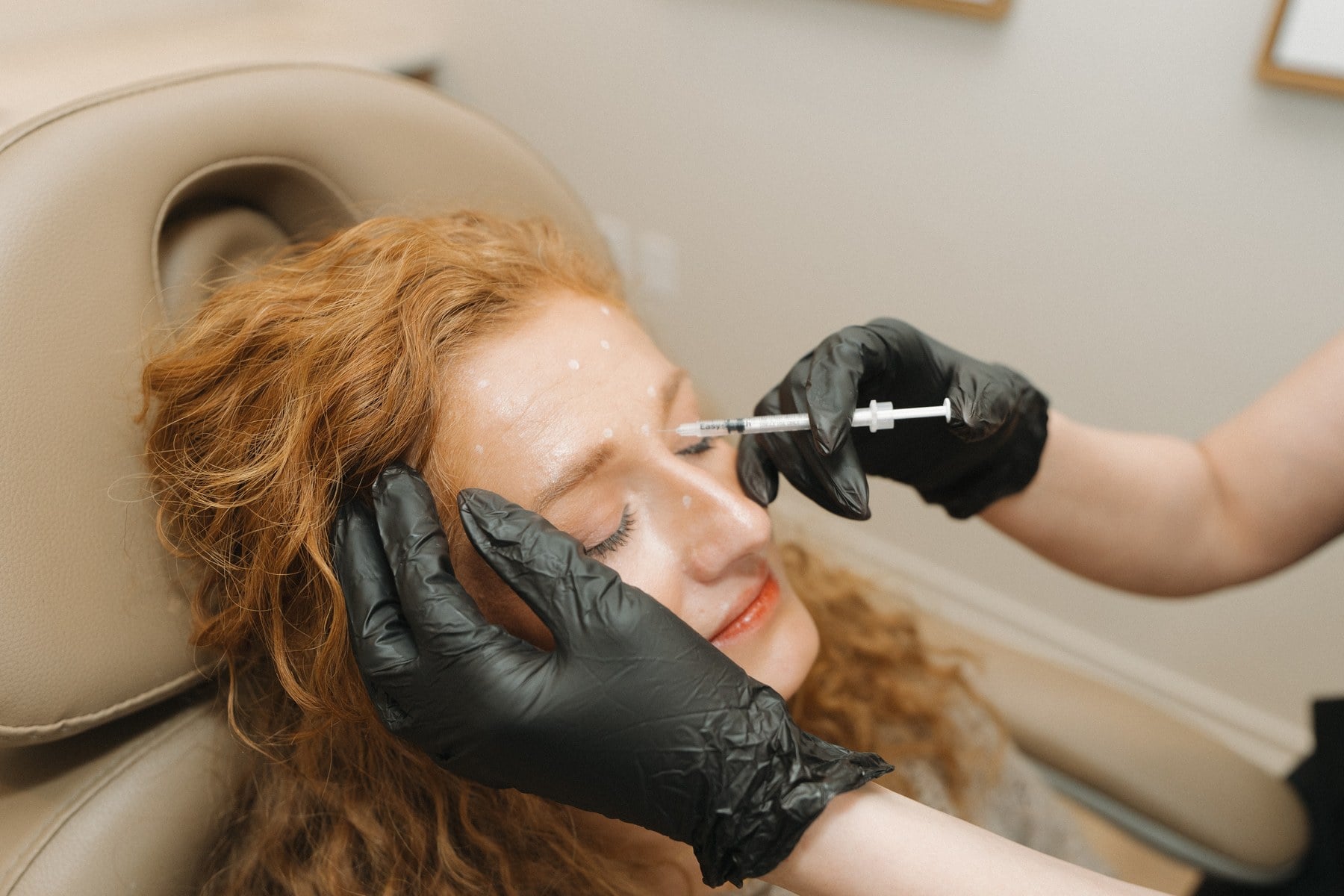
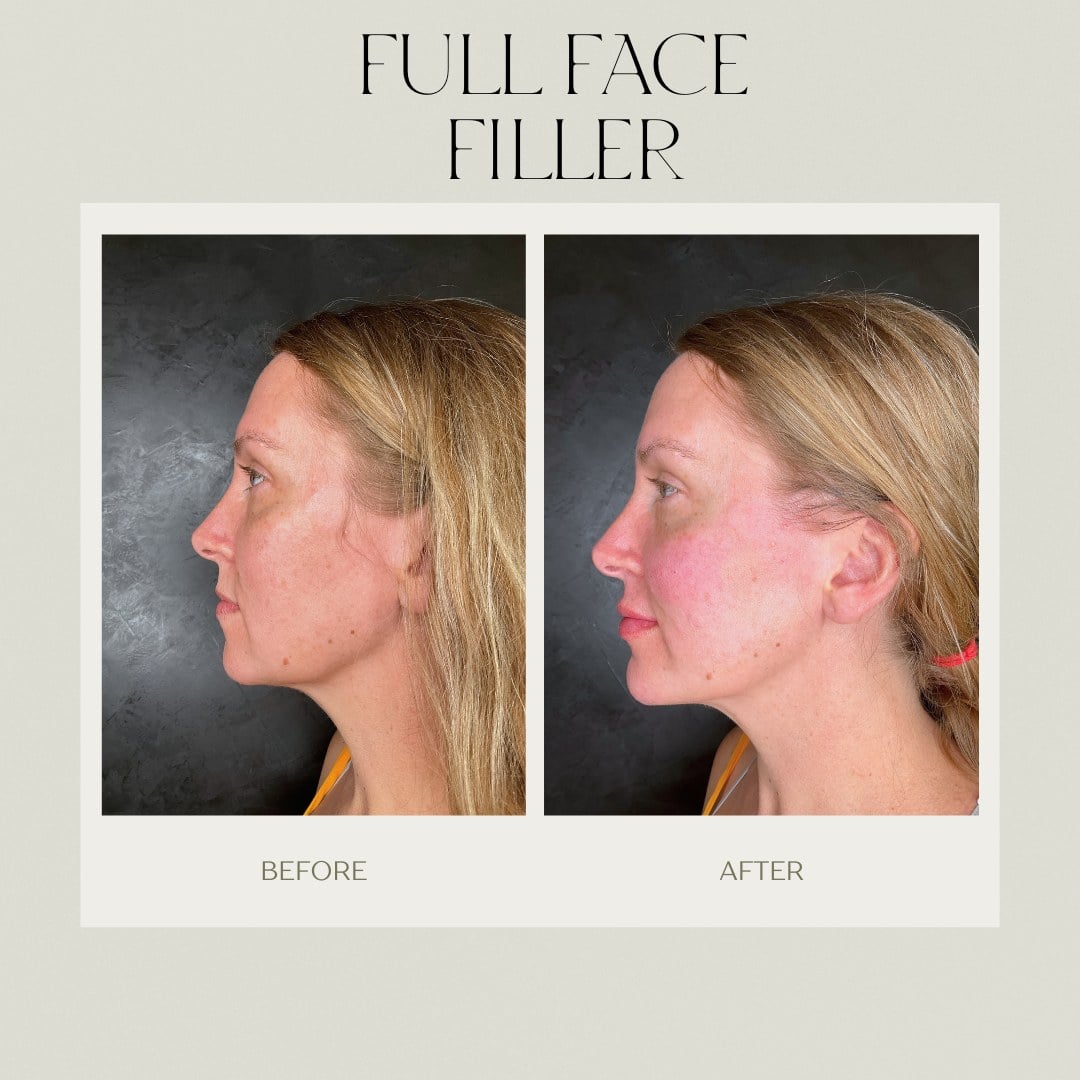
Hyaluronic acid gel put back into the specific compartment that emptied. Visible the same day, settled at two weeks, lasting nine to eighteen months depending on the area. It replaces volume; it does not tighten skin.
- 02Sculptra
Gradual, and it works on the cause rather than the symptom
Poly-L-lactic acid prompts your own collagen to rebuild over three to six months, across a broad area rather than a single point. Nobody sees a treatment day. The trade-off is patience: there is nothing to look at for the first six weeks.
- 03Lip Filler
For the specific volume loss people notice first
Lips thin earlier and faster than the rest of the face. Restoring what was there reads as rested; adding more than was there reads as work, and we would rather do the former and have you come back than the reverse.
What we would recommend
Structure first. Always.
The cheek comes before the fold. When someone asks us to fill the line beside their mouth, the treatment that actually works is usually support in the mid-face — the fold is a consequence of the cheek dropping, and filling it directly produces a heavy, filled look while the underlying problem is untouched.
If the loss is diffuse rather than in one spot — a face that has generally flattened rather than a specific hollow — Sculptra is the better tool. It rebuilds across an area, which is exactly the shape of the problem, and it avoids the overfilled look that comes from chasing diffuse loss with gel.
We treat one region at a time and let it settle for two weeks. Faces are symmetrical only in theory, and the second appointment is far better informed than the first.
What to expect
How long it takes and how long it lasts.
- Filler timeline
- Result visible immediately, swelling settled by day fourteen. Cheek and jawline filler typically lasts twelve to eighteen months; lips run nine to twelve because the area moves constantly.
- Sculptra timeline
- A course of two or three vials, six weeks apart. Nothing visible for the first six weeks, obvious by month three, still improving at month six. It holds for around two years.
- Downtime
- Bruising is possible and more likely around the lips. Most people are presentable the next day and fully settled within a week. We do not book filler within two weeks of an event.
- Cost
- Filler is priced per syringe and Sculptra per vial, because the number needed varies far too much for a single figure to be honest. Both are published on the pricing page.
Facial Filler is $750 at our Neenah studio. It is the treatment most plans for this concern are built around, and every other figure on this page’s options is published too.
Common questions
What people ask about facial volume loss.
What happens if I do nothing?
Volume continues to decline gradually — roughly one percent of collagen a year from your twenties — and the face slowly reorganises around it. Nothing bad happens; you simply keep looking like yourself ageing at the normal rate. That is a perfectly legitimate choice. The reason people treat it is not that it is dangerous but that it is the change they notice most in photographs.
Will filler make me look done?
It will if too much is placed in the wrong plane, which is what most people have actually seen and reacted to. Restoring volume to the compartment that lost it reads as rested rather than filled. The look people dislike usually comes from repeatedly adding product to the surface instead of rebuilding the structure underneath.
Is Sculptra better than filler?
Neither is better; they solve different shapes of problem. Filler is right when a specific area has hollowed and you want it corrected precisely and soon. Sculptra is right when the whole face has flattened and you would rather nobody could point to when it changed. Plenty of plans use both, in different regions.
How long does facial filler last?
Between nine and eighteen months, depending mainly on the area. Filler in a mobile region like the lips metabolises faster than filler along the jaw or in the cheek, where there is less movement. Some structural filler is still measurably present past two years even when the visible effect has faded.
Can filler be removed if I do not like it?
Hyaluronic acid filler can be dissolved with hyaluronidase, usually within a day or two. Sculptra cannot — it works by stimulating your own collagen, and there is no reversal for that. It is the single most important difference between them and it belongs in the decision, not in the aftermath.
Does losing weight cause volume loss in the face?
Yes, and it is one of the most common reasons people come in. Facial fat compartments shrink along with everything else, and because they were already thinning with age the effect lands harder than expected. If you are actively losing weight, we would generally wait until it has stabilised before planning volume work.
Bring the photograph.
One from five or ten years ago tells us more about what has changed than any assessment of your face as it is now. It is the most useful thing you can bring.