Dull Skin Treatment in Neenah, WI
Tired-looking is a light problem, not a sleep problem.
Skin looks radiant when its surface is smooth enough to reflect light in one direction. Dehydration, slow cell turnover and a compromised barrier all scatter that light — which is why the face in the mirror looks flat regardless of how much sleep you got.
What is actually happening
Dehydrated is not the same as dry.
Dry skin lacks oil and is a skin type you are born with. Dehydrated skin lacks water and is a condition anyone can develop, including people with oily skin. Treating dehydration with heavier moisturiser is the most common mistake in the category, and it addresses the wrong deficiency entirely.
The barrier is usually involved. When the lipid layer is compromised, water escapes faster than it can be replaced, so the surface stays under-hydrated no matter what is applied on top of it.
Then there is turnover. Cell renewal takes around 28 days at twenty and considerably longer at forty-five, so dead cells accumulate on the surface. That layer is what scatters light and reads as dull.
In this climate the winter contribution is significant. Six months of dry indoor heat and sub-zero air pulls water out of the skin continuously, which is why so many people describe their skin as flat from November onward and fine again in May.
What we can do about it
Four options, from an afternoon to a season.
Two of these change how skin looks this week and two change how it behaves over months. For most people the honest answer involves both.
- 01Glo2Facial
The best single treatment for immediate radiance
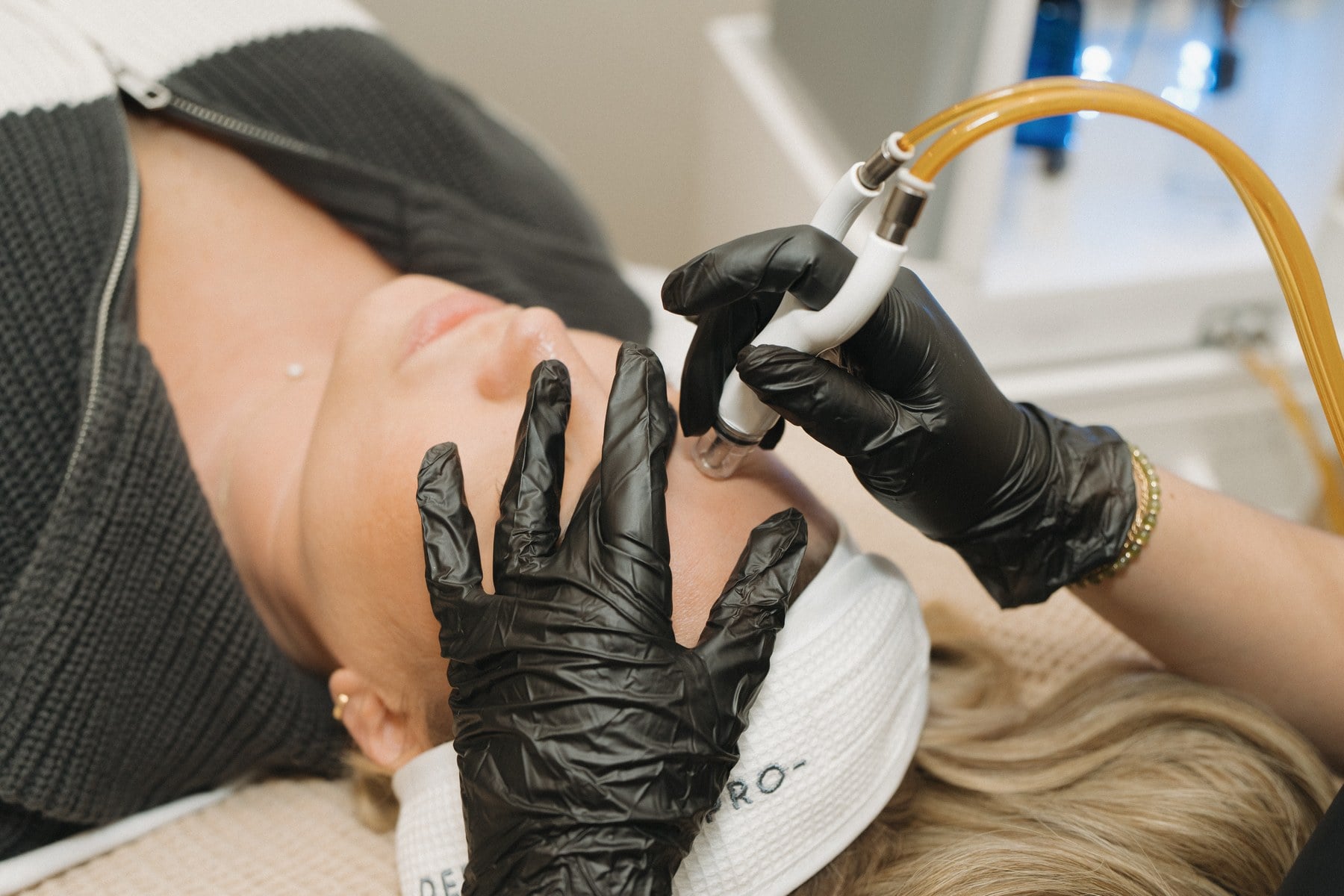
Exfoliates, then oxygenates the skin from within using a reaction at the surface, then infuses actives. Skin looks noticeably brighter the same day. It is a treatment for how you look this month, not a structural change.
- 02Skinvive
Hydration placed into the skin rather than onto it
Microdroplets of hyaluronic acid injected into the dermis to improve smoothness and hydration for months at a time. It does not add volume or change shape — it changes skin quality only, and that distinction is the whole point of it.
- 03DiamondGlow Facial
For dullness caused by build-up
Resurfaces and infuses in one pass, so it clears the dead layer scattering the light and puts serum into the cleared skin. Best as a rhythm every six to eight weeks rather than a one-off before an event.
- 04Illumatox Signature Facial
The maintenance appointment
A properly customised professional facial, which for a lot of people is the entire answer. It will not correct pigment or texture damage — for that, resurfacing is the right category.
What we would recommend
What we would suggest.
If this is seasonal — fine in summer, flat from November — treat it as a hydration and barrier problem. A Glo2Facial every six to eight weeks through the winter, plus a proper humectant and a barrier repair cream at home, handles most of it.
If it is year-round and the skin also feels rough, the driver is turnover rather than water. Exfoliating treatments and a retinoid do more than any amount of hydration will.
Skinvive is the option worth knowing about for people who have tried everything topical. It puts hyaluronic acid into the dermis where products cannot reach, and the effect runs for months rather than days. It is not filler and it will not change your shape.
What to expect
What to expect and how often.
- Immediate
- A Glo2Facial or DiamondGlow shows the same day and holds for around three to four weeks. This is the treatment to book two days before something that matters.
- Rhythm
- Every six to eight weeks is the interval that actually maintains skin quality. Less often than that and each appointment is starting from the same place.
- Skinvive
- One treatment, results developing over about a month and lasting up to six. Some swelling and small bumps for 24 to 48 hours as the microdroplets settle.
- Cost
- Facials are single-session prices with member pricing, and Skinvive is priced per syringe. All are published on the pricing page.
Glo2Facial is $199, or $159 for members at our Neenah studio. It is the treatment most plans for this concern are built around, and every other figure on this page’s options is published too.
Common questions
What people ask about dull, dehydrated skin.
Is dehydrated the same as dry?
No, and confusing them is why most people treat this wrong. Dry skin lacks oil and is a skin type you are born with. Dehydrated skin lacks water and is a condition anyone can have, including oily skin — which is why people describe skin that is greasy and tight at the same time and assume they are imagining it. Dehydration is temporary and treatable; adding a heavier cream to it usually makes things worse.
What is the difference between dry and dehydrated skin?
Dry skin lacks oil — it is a skin type, it is genetic, and it needs lipids. Dehydrated skin lacks water — it is a condition, it is temporary, and it needs humectants and barrier repair. Oily skin can be dehydrated, which confuses people into buying mattifying products that make it worse.
Why does my skin look worse in winter?
Cold outdoor air holds very little moisture and heated indoor air holds even less, so water leaves the skin continuously for about six months of a Wisconsin year. The barrier weakens under that load, turnover slows in the cold, and the result is the flat, tight, dull skin most people notice from November.
How much does a facial cost in Neenah?
Our facials range from the Signature at the accessible end to the Platinum at the top, with member pricing on every one and a meaningful saving for members. Every figure is published on the pricing page — none of it is quote-on-request, and the price you read is the price you pay.
Is Skinvive a filler?
It is made from hyaluronic acid like filler, but it is not used as one. It is injected as microdroplets into the dermis to improve hydration and smoothness rather than as a bolus to create volume. It will not change your shape, lift a cheek or plump a lip — which is exactly why people who do not want filler choose it.
How often should I get a facial?
Every six to eight weeks matches the skin's renewal cycle and is the interval at which results build rather than reset. More often is rarely necessary and can over-exfoliate; less often means each appointment starts from the same baseline. Consistency matters far more than intensity here.
The easiest concern on this site to fix.
Most dullness responds to one appointment and two changes at home. Come in and we will tell you which two.